The quantum computing industry has long operated on the horizon of potential. While 2025 was marked by groundbreaking research and expanding proof-of-concept projects, 2026 is poised to shift toward execution and utility. The core metric of success has shifted from mere physical qubit counts to high-performing logical qubits, signaling the industry’s maturity as it pivots toward actionable results and commercial deployment.
In this article, leaders from Atom Computing and key partners examine the key trends shaping various aspects of the quantum industry and share their perspectives on what’s ahead in 2026.

Dr. Ben Bloom, CEO & Founder
Atom Computing
Topic: Business Strategy & Market Trends
Summary: The core quantum computing debate in 2026 will shift from potential to proven scalability, which will accelerate market consolidation and the emergence of quantum systems built for industrial advantage.
2026 Outlook: “For years, the quantum industry has been defined by technological promise, but 2026 is the year where that promise is subjected to the commercial test: proven scalability. We believe the platforms that can scale are scaling, and those that have not yet demonstrated multi-order-of-magnitude growth are likely not scalable in the long run. The market is accelerating toward a consolidation phase that will favor architectures built for full-scale execution.
At Atom, we chose optically-controllable neutral atoms precisely because they offer the flexibility and practicality to manage millions of qubits with high fidelity at room temperature, an efficiency that is genuinely transformative for making quantum computing practical. This technical advantage is strategically aligned with the market's need to transform commercial science. Customers seeking real ROI in major industrial advances in areas ranging from drug discovery to advanced materials, will stop focusing on physical qubit counts and start demanding verifiable, high-fidelity logical qubits and the infrastructure to orchestrate them. In 2026, the market will begin to consolidate around the players who can deliver the execution needed to meet this commercial demand, forming deep technical partnerships across the supply chain” — Dr. Ben Bloom
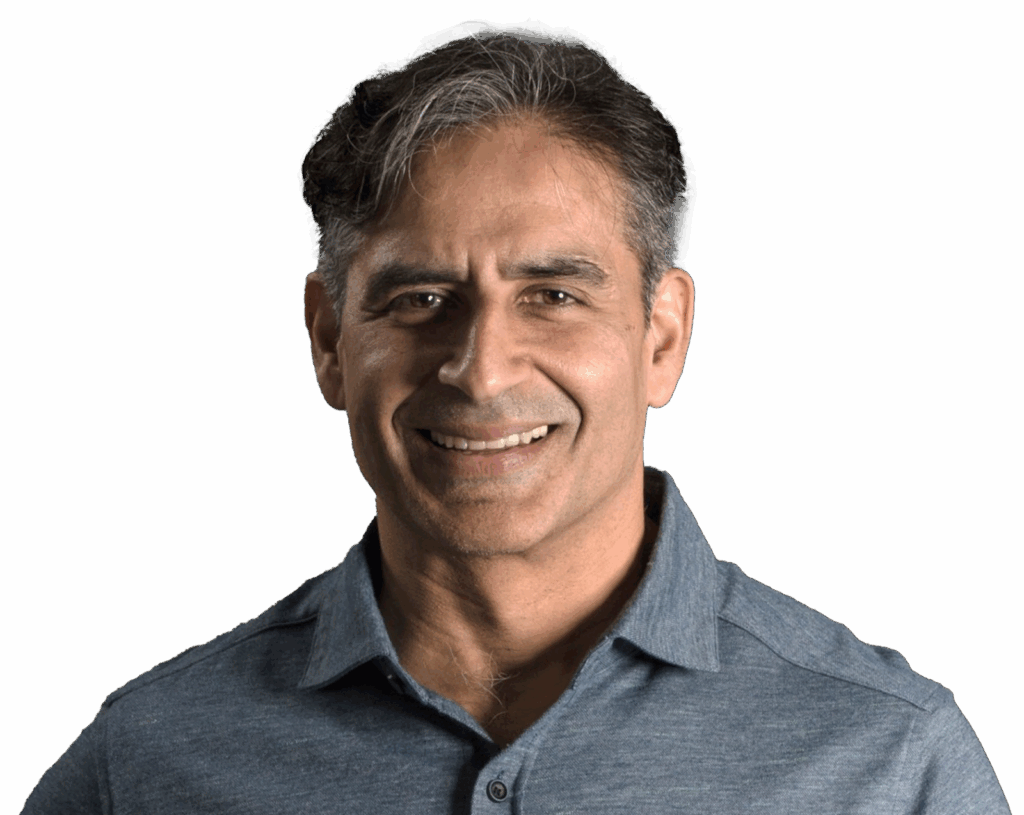
Zulfi Alam, Corporate Vice President
Microsoft Quantum
Topic: Market & Application Trends
Summary: 2026 signals the transition from experimental quantum efforts to practical impact, with Microsoft driving scalable, fault‑tolerant systems, hybrid quantum–classical breakthroughs, and rising urgency around post‑quantum security.
2026 Outlook: "2026 will mark the shift from experimental quantum systems to early real-world utility. At Microsoft, we’re advancing error correction, and the full compute stack needed to unlock scalable, fault‑tolerant quantum computing—critical for solving problems classical machines can’t touch. Expect hybrid quantum–classical workflows to drive breakthroughs in chemistry, energy, and materials science, while post‑quantum security becomes a boardroom priority. We’re moving from experimentation to application." — Zulfi Alam

Dr. Krysta Svore, VP of Applied Research – Quantum Computing NVIDIA
Topic: AI Integration & System Optimization
Summary: This year the integration of quantum processors with AI supercomputing will move from research to real-world impact, enabling more efficient control systems and innovative hybrid quantum-classical applications across the ecosystem.
2026 Outlook: "Quantum computing continues to advance at an accelerating pace. A key next step is integrating quantum processors with AI supercomputing. This convergence will enable more efficient control systems, optimized runtime environments, and innovative hybrid quantum-classical applications. During 2026, these integrations are expected to become ubiquitous, embedding AI and high-performance computing at the heart of quantum innovation and accelerating progress from research to practical impact across the quantum computing ecosystem." — Dr. Krysta Svore

Dr. Reza Nejabati, Head of Quantum Research & Quantum Labs
Cisco
Topic: Quantum Networking & Architecture
Summary: In 2026, quantum computing’s focus shifts from building a single perfect processor to creating interconnected systems, with quantum networking and optically-switched fabrics emerging as the key to scalable breakthroughs.
2026 Outlook: "In 2026, the pursuit of quantum advantage has fundamentally shifted. It's no longer about a single, perfect quantum processor, but about architecting powerful, interconnected systems. We predict this is the year quantum networking will be recognized as the indispensable technology for scaling quantum computing, with advanced, optically-switched fabrics being the key to unlocking the next generation of quantum computational breakthroughs." — Dr. Reza Nejabati

Dr. Jonathan King, Chief Scientist & Co-Founder
Atom Computing
Topic: Quantum Applications & Benchmarking
Summary: Quantum computing is expected to make steady progress as better qubits, improved algorithms, and closer teamwork between researchers help push the technology toward practical scientific breakthroughs.
2026 Outlook: “In 2026 we expect to see further demonstrations of error-corrected qubits with increasing performance, scale, and complexity, with a focus on building out the full set of operations needed for fault-tolerant quantum computing.
The earliest scientific advantage in quantum computing is expected to come from simulations of condensed matter physics. Even as quantum computing hardware improves, we expect further advancements in the algorithms themselves. In 2026 we predict closer collaboration between algorithm developers and hardware providers to explicitly develop and optimize use cases with concrete resource costs (qubit count, error rate, and runtime).” — Dr. Jonathan King

Justin Ging, Chief Product Officer
Atom Computing
Topic: Commercialization & Product Strategy
Summary: Global demand for sovereign quantum capabilities is driving the shift toward on-premises, fault-tolerant systems, validating Atom Computing’s strategy of delivering high-qubit-count, full-stack platforms.
2026 Outlook: “Increasingly, regions around the globe are seeking to develop their quantum ecosystems by training their workforce, advancing research, and exploring how their key industries can leverage quantum computing. On-premises quantum computers are foundational to their strategy, and it is Atom Computing’s goal to deliver the most advanced hardware and software platforms to accelerate their path to generating impactful quantum applications.
In the near term, Atom Computing’s systems leverage neutral atom technology to provide leading specifications, including 1,200+ physical qubits and all of the features needed to generate logical qubits, such as all-to-all connectivity and mid-circuit measurement. As next-generation systems are introduced, customers will be able to quickly transition to implementing economically valuable applications while maintaining a reasonable physical footprint and electrical power requirements.” — Justin Ging

Jesper Kamp, Regional Director Europe
Atom Computing
Topic: Global & European Perspective
Summary: Quantum computing will pivot from long-term vision to focused execution in 2026, driven by national strategies for technological sovereignty, a shift in performance metrics toward logical qubits and critical scaling across hybrid HPC-quantum infrastructures.
2026 Outlook: “In 2026, quantum computing will be shaped by a shift from vision to execution, as governments, especially in Europe, implement concrete policies around sovereignty, security, and long-term industrial capability.
Hybrid HPC–quantum infrastructures are increasingly being explored, with EuroHPC and national platforms driving coordinated R&D and early commercial use. Performance narratives will pivot from physical qubit counts to logical qubits, error correction and application-level fidelity, reflecting growing maturity in the hardware race. Across industries, the most serious adoption will concentrate in chemistry, materials, pharma, and optimisation, supported by rising investment in quantum-safe security and increasingly strategic global competition.
Europe’s challenge is speed, not brains - Europe will still have excellent science and a rich startup ecosystem. EU success in 2026–2030 will be judged on its ability to coordinate, scale, and commercialise faster than in the past. The EU’s complex institutional framework, while designed for inclusivity, has historically made swift execution more demanding.” — Jesper Kamp

Dr. Remy Notermans, Director of Strategic Planning
Atom Computing
Topic: Technical Architecture & Systems Planning
Summary: By encoding quantum information into highly stable neutral atoms, Atom Computing is strategically dedicating its engineering efforts to rapidly scale, control, and architect the next generation of systems, setting the stage for implementing advanced quantum error correction and a roadmap to 10,000 physical qubits.
2026 Outlook: “By using neutral atoms and encoding the quantum information into their nuclei, Atom leverages their natural stability and coherence to minimize time and effort spent on physical qubit fabrication and instead has the engineering teams focus on scaling, controlling, and orchestrating thousands of physical qubits to create many high-performing logical qubits.
In 2026, the continuing close collaboration between our optical, electrical, software, applications, and quantum engineering teams will lead to exciting progress both in near- and long-term R&D efforts, such as implementing increasingly more advanced quantum error correction, developing novel networking technology, and designing Atom’s third-generation systems with 10,000 physical qubits (10x from its previous generation). At the same time, we are bringing our state-of-the-art technology to our customers by delivering Atom’s commercial second-generation system together with Microsoft to QuNorth in Denmark.” — Dr. Remy Notermans

Dr. Kristen Pudenz, VP of Research Collaborations
Atom Computing
Topic: R&D & Partnerships
Summary: In 2026, Atom Computing's participation in key government and industry collaborations including DARPA, two DOE NQIS Centers, and Microsoft, will accelerate the validation and delivery of neutral atom technology for materials science, hybrid quantum-HPC applications, and utility-scale fault tolerance.
2026 Outlook: “In 2026, Atom Computing will be performing on DARPA QBI Stage B, the second phase of our partnership with DARPA to prove out the path to utility-scale with neutral atom technology. We will also be participating in two DOE National Quantum Information Science Centers, the Quantum Science Center, where we will be working with ORNL, LANL, and other partners to demonstrate materials applications and error correction for hybrid quantum-HPC, and the Quantum Systems Accelerator, where we will be working with LBNL, Sandia, and other partners to advance enabling technology for quantum computing hardware.
We are excited to be part of the DOE quantum community over the five-year period of performance of the Centers. Atom Computing also continues our strong existing partnership with Microsoft, delivering the Magne quantum computer to QuNorth in Denmark and advancing the practice of full-stack quantum computing together.” — Dr. Kristen Pudenz

Sarah Murrow, VP Human Resources
Atom Computing
Topic: Workforce & Talent
Summary: In 2026, as the quantum workforce matures, Atom Computing will continue to broaden its hiring focus beyond PhD-level research to cultivate diverse technical talent through academic sponsorships and rigorous, two-way interview processes focused on skill-fit and collaborative culture.
2026 Outlook: “Atom Computing cultivates sponsorships within the quantum academic space and has ramped up its speaking engagement at university and career fairs. Our interview process is invaluable. We take the time to get to know our candidates, allow them to get to know us, so we may ensure there is a fit for both parties in our collaborative environment.
As increasing numbers of candidates are drawn to the quantum industry, we will continue to broaden our hiring focus beyond PhD-level professionals, while continuing to focus on hiring those with the skillset and experience necessary to deliver fault-tolerant, utility-scale quantum technologies.” — Sarah Murrow
2026 is the year of quantum execution and delivery. The strategic shift beyond theoretical promise is driven by the global need for sovereign and on-premises capabilities, which is universally highlighted by the focus on achieving logical qubits.
The race to quantum scalability is now defined by the ability to execute on two critical factors: fault tolerance and scale. Atom Computing’s neutral atom technology is purpose-built to meet this inflection point, providing the high-fidelity logical qubits to help unlock global commercial and scientific value.
Be sure to follow Atom Computing on LinkedIn to keep up with the company’s progress and latest quantum developments throughout 2026.